
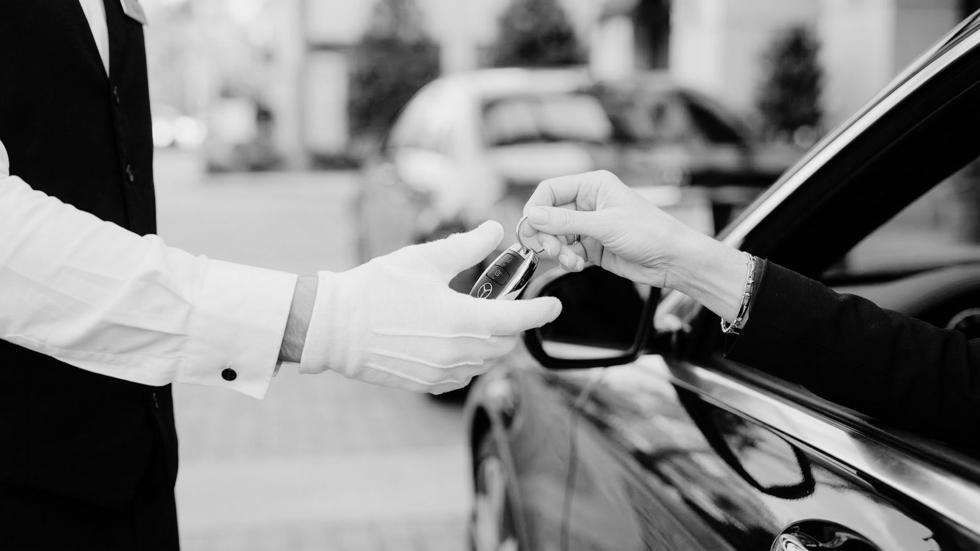
Most valet parking interactions last less than fifteen seconds.
A vehicle pulls up.
An attendant opens the door.
Keys change hands.
The guest walks away.
From the outside, the process feels simple. Almost casual.
But behind that short exchange sits a structured operational system designed to manage safety, timing, traffic flow, and accountability simultaneously. Professional valet parking is not improvisation. It is coordination happening at speed.
Once a vehicle enters a valet lane, it immediately becomes part of a controlled process built to protect both the guest experience and the vehicle itself.
At experienced operations like Gatsby Valet, every movement that follows is intentional.
Arrival Is Carefully Managed Before Parking Even Begins
Guests often assume valet attendants simply park vehicles in available spaces. In reality, parking decisions begin before the car moves an inch.
The intake process includes identifying vehicle type, estimating expected departure timing, and assigning staging priority. During busy service periods, dozens of vehicles may arrive within minutes, making early organization critical.
Professional intake systems typically account for:
- Arrival order tracking
- Vehicle identification
- Parking zone assignment
- Key control procedures
- Traffic flow coordination
Efficiency begins at arrival, not departure.
Security Starts the Moment Keys Are Handed Over
One of the most common concerns guests have is vehicle safety. Handing keys to someone unfamiliar naturally creates hesitation.
Professional valet operations address this concern through layered security protocols rather than informal oversight.
Vehicles are parked within controlled environments where access is limited and monitored. Attendants follow strict movement guidelines designed to minimize unnecessary driving and reduce risk exposure.
Security measures commonly include:
- Licensed and trained attendants
- Controlled parking zones
- Key tracking systems
- Insurance-backed procedures
- Continuous operational supervision
For transparency around these processes, Gatsby explains what actually happens to your car during valet parking in greater detail.
Professional valet service replaces uncertainty with structure.
Modern Vehicles Add Another Layer of Protection
Technology now plays an important role in vehicle security during valet service.
Many drivers are unaware that their vehicles include built-in protections specifically designed for valet situations. Activating valet mode restricts access to personal information while limiting certain vehicle functions.
Depending on the vehicle, valet mode may:
- Lock glove compartments or storage areas
- Restrict infotainment access
- Limit acceleration performance
- Protect navigation or personal data
Drivers unfamiliar with these features can review what valet mode means for vehicle security before arriving at a venue or event.
Technology and professional handling now work together to enhance confidence.
Parking Layout Is Strategically Planned in Real Time
Behind the scenes, parking is constantly being reorganized.
Experienced valet teams do not simply fill available space. Vehicles are positioned based on predicted departure patterns. Guests expected to leave early are staged differently from long-duration parkers.
This dynamic planning prevents delays hours later when multiple guests request vehicles simultaneously.
Operational planning relies heavily on preparation tools discussed in essential equipment for a top-notch valet service, including communication systems and staging layouts that maintain order under pressure.
Effective parking is predictive, not reactive.
Retrieval Begins Long Before Guests Ask for Their Cars
Guests often assume retrieval begins when they present their claim ticket.
In reality, experienced valet teams anticipate demand waves based on venue activity. Restaurant turnover, event schedules, and residential traffic patterns all create predictable retrieval surges.
Attendants monitor these patterns continuously, preparing vehicles before requests peak.
This preparation allows guests to experience quick returns without realizing coordination began minutes earlier.
Speed comes from planning, not rushing.
Why Valet Parking Myths Continue to Exist
Because guests rarely see operational systems, misconceptions persist.
Some believe valet attendants drive vehicles excessively or park cars in unsecured locations. Others assume services lack accountability compared to self-parking.
Professional operations function very differently.
Strict procedures limit vehicle movement, track responsibility, and maintain operational oversight throughout service hours. Gatsby addresses these assumptions directly in debunking common myths about valet parking.
The reality is far more controlled than most people imagine.

Valet Parking Began as Logistics, Not Luxury
Valet parking is often associated with upscale environments, yet its origins were practical rather than decorative.
As cities became denser and parking availability decreased, businesses required organized arrival management to prevent congestion. Restaurants and hotels introduced valet systems to maintain accessibility despite limited space.
The evolution outlined in where valet parking originated shows how operational necessity eventually merged with hospitality expectations.
Modern valet service remains rooted in efficiency first.
Professional Attendants Operate Under Constant Pressure
Valet attendants balance multiple responsibilities simultaneously.
They manage vehicle safety, guest interaction, traffic control, and time-sensitive retrieval demands while maintaining professionalism in highly visible environments.
Core skills include:
- Situational awareness
- Defensive driving ability
- Customer service communication
- Spatial judgment
- Rapid decision-making
Roles such as the valet attendant position require training and accountability beyond what most guests realize.
Smooth service reflects professional expertise.
Small Details Prevent Large Disruptions
Operational efficiency often depends on minor details. Lost valet tickets, unclear pickup instructions, or miscommunication can slow service significantly during busy periods. Attention to small operational risks prevents larger disruptions later.
The System Guests Never See
The most successful valet operations are nearly invisible.
Traffic flows naturally. Vehicles return quickly. Guests move through arrivals without friction.
From the outside, the process appears effortless.
Behind the scenes, coordinated systems manage risk, timing, safety, and efficiency simultaneously from the moment keys change hands until vehicles are returned.
Working with experienced providers like Gatsby Valet ensures that what feels simple to guests is supported by planning, training, and operational precision.
Because professional valet service is not defined by parking cars.
It is defined by everything guests never need to think about.